
Books to self-isolate with. Part 2.
Things have taken a more sinister turn since we last met. In my previous post, I wistfully went about sharing with you five books that I have enjoyed reading on the back of World Book Day.
Life was so much simpler then. We weren’t all going to die, we had plenty of toilet paper and Liverpool Football Club were about to win the league.
How things can quickly change. The same can be said about my Top 10 books. Already I’m disagreeing with the previous five. It’s just dawned on me too that I’ve dropped a howler as there’s no George Orwell at all.
Never mind, too late to change, we’ll crack on regardless. Here then are the next five in my entirely whimsical list of favourite reads. They appear by author surname. Trying to actually rank them in order is for another day.
6. Joseph Heller: Catch 22

If I was forced to choose though, then this is probably my Number One novel. It’s a book I’ve gone back to a number of times and each time I question myself as to whether I’ve ever actually read it. The story just keeps on giving and each time I read it, it feels like the first. What I admire most about the book – apart from the fact that the dialogue is so very funny – is its structure and scope. It took Heller seven years to write and I can see why. (If you’re not convinced, scroll to the end.) Written as a non-linear storyline, with each chapter based on a different character, it really is an extraordinary piece of cult fiction about the absurdity of war.
7. Ernest Hemingway: The Old Man and the Sea

I think I’m in love more with the concept of Ernest Hemingway than I am with his books. I’ve read a number of his works, and although I’ve enjoyed them, it’s the fable-like simplicity of The Old Man and the Sea that takes me to places hitherto unknown. Written in 1951, the novella describes vividly the events of a fishing trip off the coast of Cuba in which a grizzly old man attempts to catch a giant Marlin. Oh, to be there now! The book received the Pulitzer Prize for Literature in 1954 and was Hemingway’s last major works ever published.
8. Clive James: Unreliable Memoirs

Clive James is a man who I’d most like to have had over for dinner. Like most of us, it was the Clive James on Television programme that first brought him into our homes and exposed us all to those bonkers Japanese contestants on Endurance. James though was far more than a broadcaster. He was an essayist, poet, critic, lyricist and novelist, which is why of course he’s ended up here. Unreliable Memoirs forms the first instalment of his five-part autobiography and tells the story of his early life in Australia before Falling Towards England. Sadly, Clive James is no longer with us and so this book (amongst many) remains a lasting legacy.
9. Stephen King: The Stand

Now you might think I’m scaremongering here, but I actually chose this book at the time I wrote the first part of this post several weeks ago. This was pre-Covid-19, so the fact that this book is one of the finest post-apocalyptic stories ever told is entirely coincidental. The Stand is immense. It will take you the best part of six months to read, so by time you get to the end, we’ll all be fine as we emerge into a new dawn. Stephen King tweeted recently that The Stand is nothing like coronavirus, reminding us that it was written over 40 years ago. He might be right, but until you’ve read the book, you’ll never know.
10. David Lodge: Paradise News

I first came across David Lodge when I picked up a second hand copy of Changing Places, the first instalment of his wonderfully satirical Campus Trilogy. Lodge is an English academic having previously lectured at the University of Birmingham. Two of the trilogy were Booker shortlisted. I’ve chosen instead though Paradise News, a story about middle-aged sexual awakening, Catholic guilt and the pursuit of heaven on earth. What more could a reader want from a plot? Published in 1991, Paradise News is a charming, witty and feel-good story that allows you – amongst other things – to get lost in Waikiki, Hawaii. It’s probably about as close as any of us will ever get to a beach this year, so it’s well worth a read.
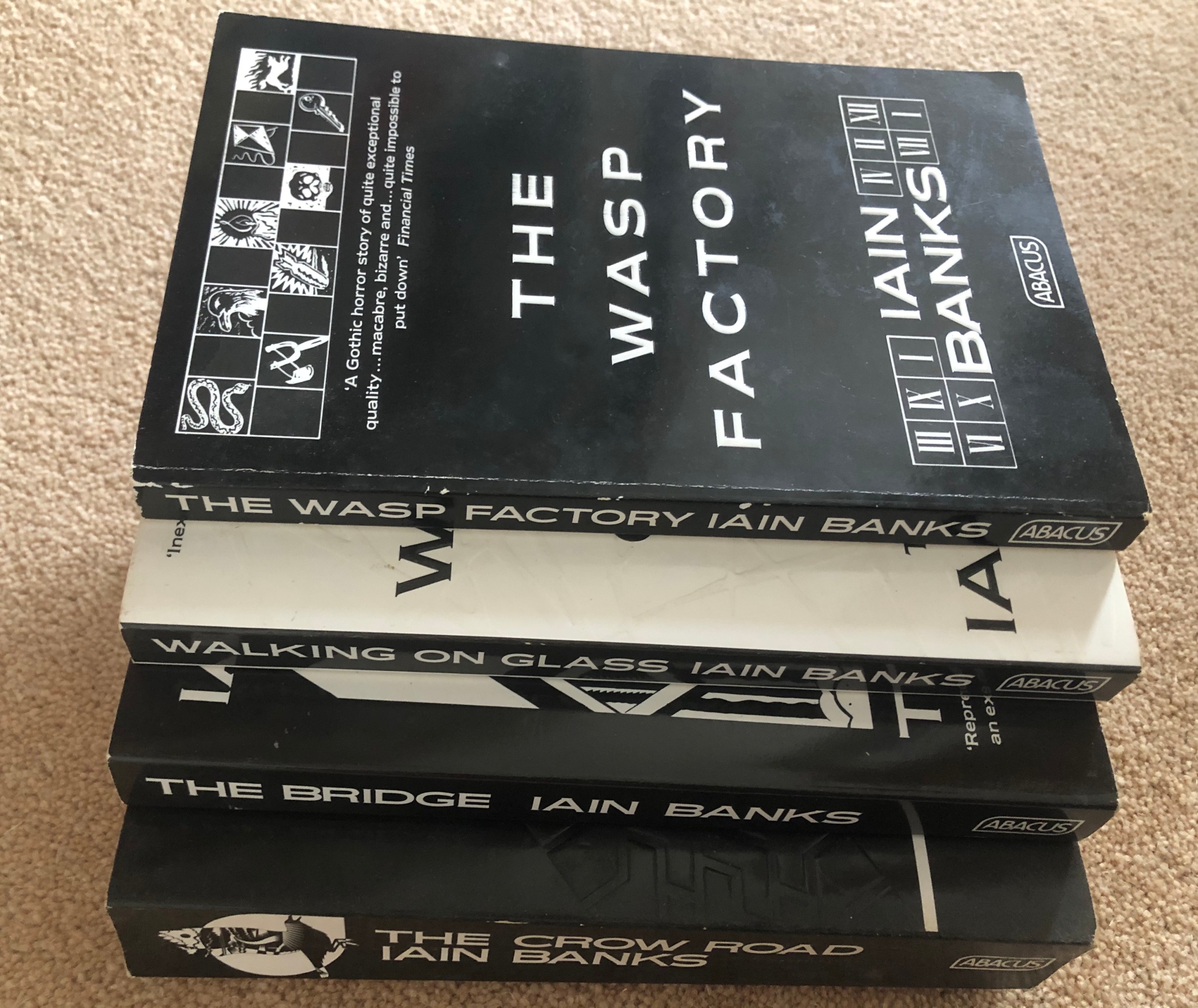
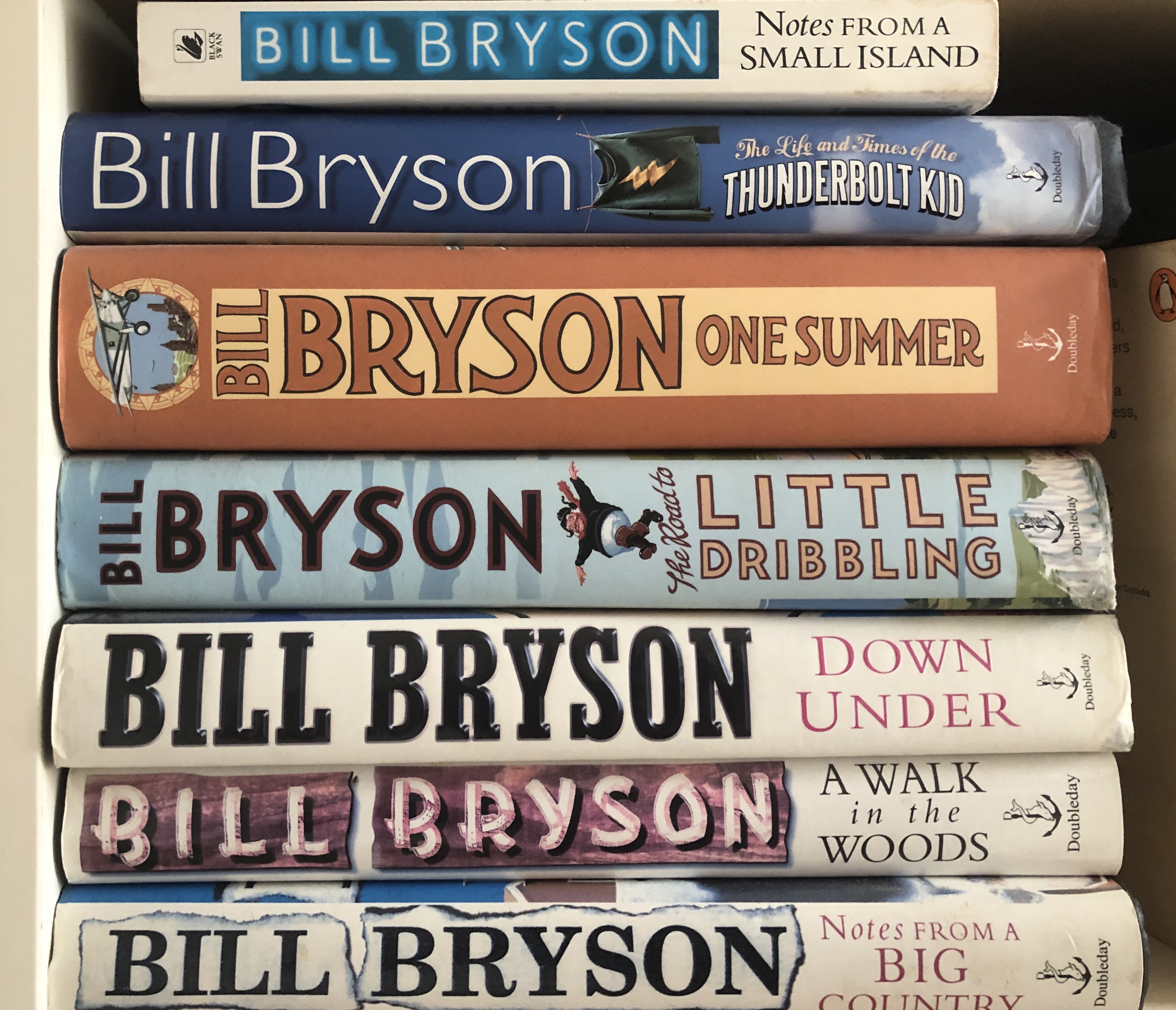
So there we have it. Ten authors, ten books, that include Banks, Bates, Bryson, Fleming, Fry, Heller, Hemingway, James, King and Lodge. Strangely, they only cover the first half of the alphabet. I shall make it my mission to read more widely in future, taking full advantage of the letters available.

Joseph Heller’s handwritten notes outlining the plot and structure of Catch-22.

An easier to read version of Heller’s notes. Good luck to anyone that can turn this into a book.


 Known Pleasures: