Top 5 Christmas songs

Each year we spend far too much time as a family arguing about our Top 5 Christmas songs. We never seem to come to an agreement, so to put the matter to bed once and for all, here is the answer to our Festive 5. According to me anyway.

5. Boots by The Killers

7A09230B-103F-43B8-93C1-0BC340E874DC

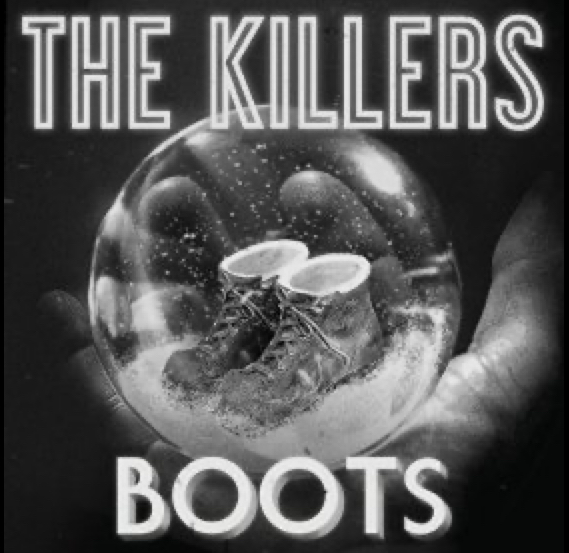
Featuring dialogue from one of the greatest Christmas films ever, It’s a Wonderful Life, this was the bands fifth consecutive Christmas single, released as a digital download in 2010. It barely knocked on the door of the top 50. The sleeve is a nod to another classic movie, Citizen Kane, with the snowglobe featured in the opening scene. A rare Christmas song that wasn’t released in the eighties that is actually very good. 

4. Run Rudolph Run by Chuck Berry

‘All I want for Christmas is a Rock and Roll electric guitar’, sings Chuck in 1958, a theme immortalised 30 years or so later, only this time wanting a Dukla Prague away kit.  Unlike Half Man Half Biscuit, Chuck Berry was serious mainstream at the time, and his welcome entry into the Christmas market with a two-minute burst of rock and roll is the stuff of Festive legend. Peaking at No.36 in 1963, the song has been covered numerous times, Slaughter and the Dogs, Sheryl Crow and The Grateful Dead, to name but a few.    

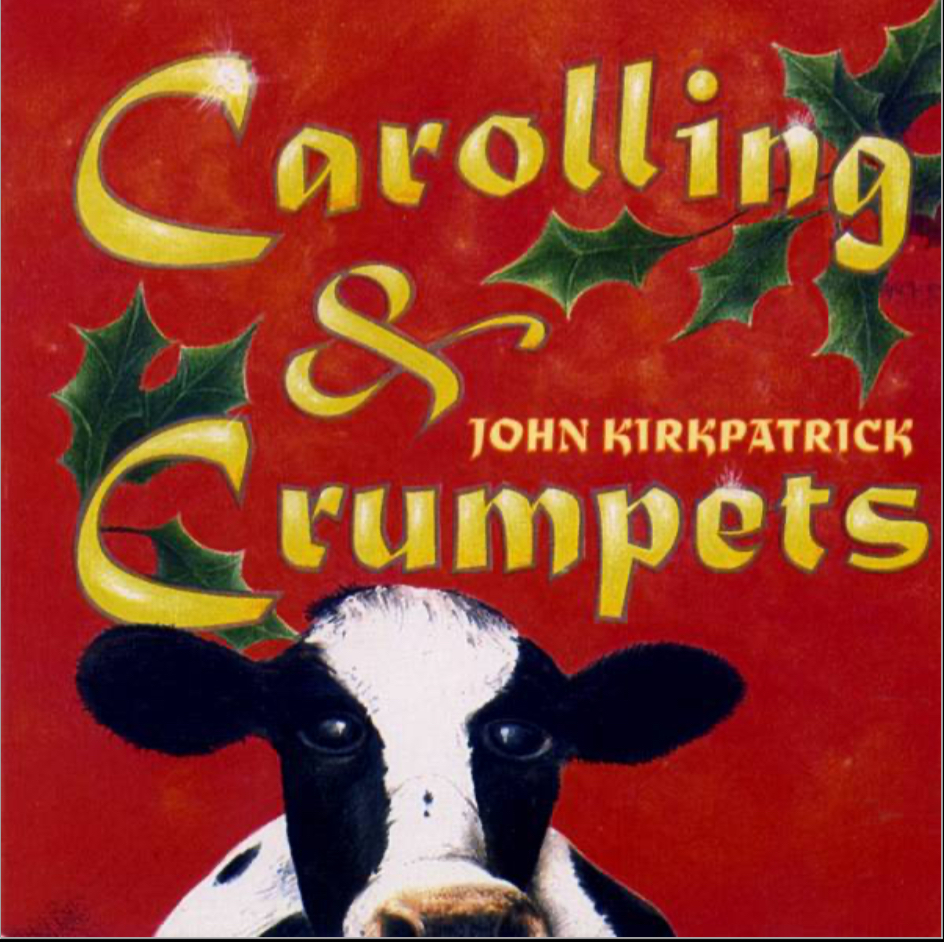
3. Jogging Along With Me Reindeer by John Kirkpatrick

2B9DA4D3-1706-471D-8878-C67803764247

This is a firm family favourite. We were travelling back late one night in the car, listening to 6 Music and this song came on. We immediately started singing along with it, and after a quick Shazam, I downloaded it and we’ve never looked back. Any track from a Christmas album called ‘Carolling & Crumpets’ (2006) will always pique my interest, especially if it’s such a catchy folk tune from a guy previously in Steeleye Span. Originally released in 1980, Jogging Along remains Kirkpatrick’s only solo single. 

2. Postcard from London by Ray Davies

0AF0E588-C5CA-497C-9C5A-EFF32BAD30D4

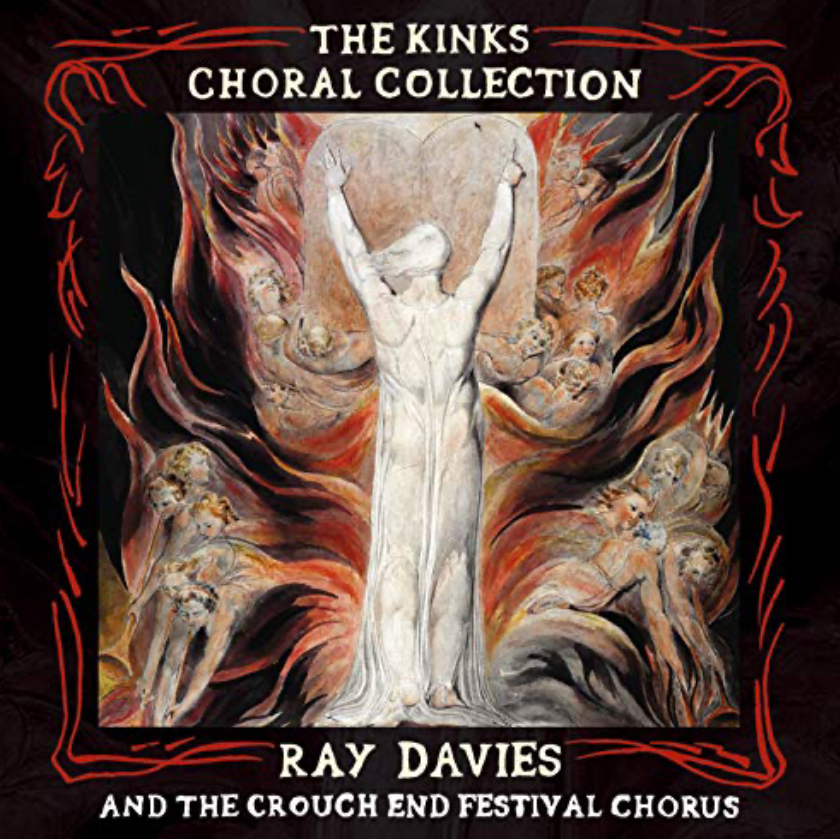
I’m a sucker for a good old choir at Christmas, and this uplifting song features the semi-legendary ‘Crouch End Festival Chorus’. My wife is from Crouch End and so this song has added relevance, especially as local(ish) lad Ray Davies included it in his 2009 Kinks Choral Collection album. Its pedigree is further enhanced by the fact that he co-wrote it with a certain Chrissie Hynde, even though his first choice apparently was Dame Vera Lynn, no less. The video is worth watching alone for it’s nostalgic nod to Davies’s London. 

1. Fairytale of New York by The Pogues (ft Kirsty MacColl)

7BBEA9B7-A358-4ABD-9C28-AEF91E88B316
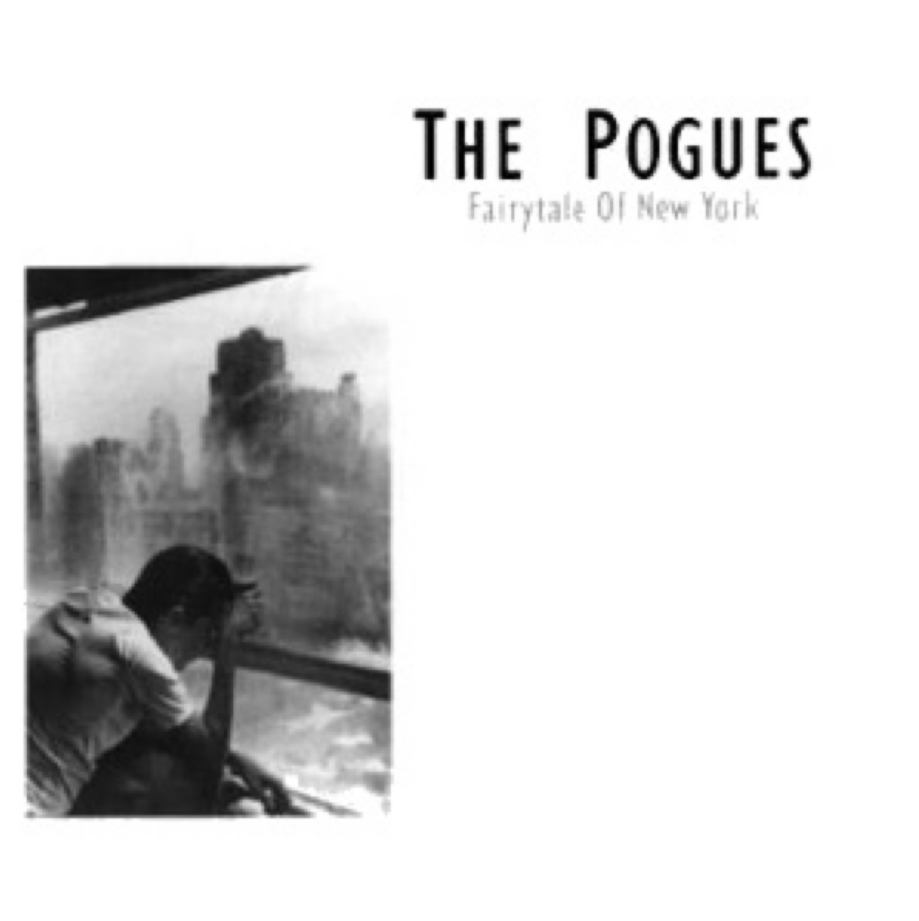
There’s nothing original or controversial about the inclusion of this one. I read somewhere that its status as the UK’s Favourite Christmas Song has even been enshrined in the Withdrawal Agreement, such is its standing as a national treasure. Lyrically, it stands out head and shoulders above all other Christmas songs and is packaged beautifully in a monochrome sleeve. Kept off top spot by the Pet Shop Boys in 1987, the ballad was voted the most-played Christmas song of the 21st century.


Other top tunes that almost made the cut? Well, certainly ‘White Christmas’. No, not that one, but the version by The Wurzels. The ‘Ooh, Aars’ take it to a new level.

As levels go, and right up there at the top for most people, is of course the ubiquitous ‘Last Christmas’ by Wham. I’m not even bothering with a hyperlink because I think you might know it. The intro still makes the hairs on the back of my neck stand on end because my wife and I first met dancing drunkenly to it at a Christmas do at the Blue Angel in Liverpool in 1990. 

The Wombles really did rule the world at one point and they always get a good airing in our house. The big day wouldn’t be complete without wishing each other a Wombling Merry Christmas.  

Finally, if you still can’t decide which is your favourite,  then you can’t go wrong with a bit of Brett Domino and his Ultimate Christmas Medley. It contains about 40 different Christmas classics in one 16 minute EP. I really can’t make up my mind if it’s musical genius or just shit. I’ll let you decide.

Pickled Eggs: Are they all that?

It’s that most wonderful time of the year. Yes, this weekend the nation unites as we make our Festive Pickled Eggs. Here’s my recipe that will transform your Christmas feast and have the kids begging for more. Or not.

Ever since I was a kid, Christmas means pickled eggs. Actually, if I was to be really precise it’s Boxing Day, when they first made an appearance. My mum would go to the larder and ceremoniously place a jar of them centre stage alongside the cold turkey, stuffing, leftover roasties, sprouts, pickles, crisps, and cold bread sauce. They’re not the most attractive of fare. They do tend to resemble something straight out of an exhibit from some Victorian embalming museum.

We would then waste the next half hour cursing as we’d try to get the elusive buggers out of the jar. A spoon is impossible – trust me, the egg just slides off. You might try and lever the thing up the side of the glass, but all you’ll do is crush it. Scrambled pickled egg is not nice. And don’t even think about using your fingers. One year, the eggs had swollen so much to the extent that they wouldn’t even fit through the neck of the jar.

I find a telescopic pickled onion fork to be my culinary implement of choice. By expertly applying just the right amount of pressure and getting the angle correct, they can be prised out of the jar. But you do need to practise. If you’ve ever used an extremely large syringe or administered anaesthetic to an elephant, you will have a distinct advantage.

It helps of course if you like pickled things. And cold boiled eggs. My wife hates them, which is a good thing, as it means there are more to go round for me and the kids. So we get to cook them the way we like, which is slightly on the rare side. In the seventies, there was only one way to cook the eggs. As with most foodstuff back then, it had to be boiled to within an inch of its life. This was the law. It was illegal to boil anything in water – spuds, cabbage, sprouts – for less than thirty minutes.

This only applied to vegetables, presumably to remove the need to chew them and save the nation energy. The quicker we ate them, the sooner we could turn the lights off. I think it was something to do with the three-day week. Unfortunately though, overcooking an egg has the opposite effect to soggy veggies. Eating an excessively hard-boiled egg was like chewing a squash ball. And then when you got to the yolk, it was seldom yellow but always a kind of murky, crumbly grey. But we never let that put us off, because by this stage, the hairs inside your nose had been singed off by the acidity and there were tears running down your face. You couldn’t have tasted the egg, even if you wanted to. It was great for clearing sinuses.

Nowadays of course, we are far more sophisticated and subtle in our tastes. I like to try and hard boil my eggs so that they are still slightly gooey – always a gamble as there’s the risk that you end up biting into a semi-raw yolk. The stress is worth it though. If you’ve ever had a perfectly cooked scotch egg, you’ll know what I mean.

My kids though (all teenagers now) don’t want unnecessary pickled egg jeopardy at Christmas. Life is stressful enough. They just want to know that when they bite into the egg, they’ll get a burst of eggy silkiness before the bad-boy spices do their bit. Oh, and don’t ever try to feed a pickled egg to a child under 12. It’s cruel and unnecessary.

Unless of course you grew up in the 70s, where they were considered a staple part of the festive diet, certainly in my house. This was on a council estate on the Kent coast, but I’m sure it transcends beyond the north-south divide, unlike gypsy tart that was only ever served in Kent schools.

As a kid it was always Sarsons. It still is, only nowadays we have the white vinegar variety. This is far more subtle than the in-your-face brown malt variety, the type you put on your chips. I made the eggs one year using this and I promised my kids, never again. It did give the eggs a nice bronzed effect, plum-like even, but it also took away the lining of your stomach.

So this year, it’s back to the tried-and-tested recipe of white vinegar, caster sugar, a few spices and eggs. So long as you don’t undercook them, and give the eggs at least a fortnight to sit in the pickling potion, they’ll be delicious. Allowing them to stand is essential, as the longer they have, the mellower they are. Dr. Randy Worobo (God bless him) has devoted his entire life to studying this. His seminal research on pickled egg production in 2013 confirms that the magic acidity level of pH 4.6 can be achieved after about one week of standing. Leaving them for months on end really doesn’t make any difference. If you want more reassurance you can download his paper here from Cornell University in America.

Finally – and if you’re still not convinced about the merits of the humble pickled egg – then you can’t beat bringing out a pile of them at dinner parties for sheer drama. They are right up there with tinned salmon vol-au-vents and the cheese and pineapple hedgehog. I remember one year my mum was so impressed with her batch of eggs, that she decanted them all in one go and stacked them into a pyramid. She then passed them round the front room like a tray of Ferraro Rocher. An awful lot of effort, but well worth it, especially if the ambassador pops round.

Recipe

  • 10 free-range eggs (even better if straight from a farm)
  • 100g caster sugar
  • 600ml of white vinegar
  • Spices: Any from a small handful of coriander seeds, peppercorns, mustard seeds, fennel etc. Add sliced beetroot or turmeric for colour.
  • 4 bay leaves
  • Fresh red chilli, sliced lengthways or a pinch or 2 of dried flakes

Method

1. Begin by rounding up a few old jam jars. Make sure they are wide enough to get an egg out, so go large. Even better if you get hold of some Kilner jars. I’ve used all mine for Damson chutney so it’s old pickled onion jars for me.

2. Heat the oven to about 180 degrees and warm the clean jars for 15 minutes to sterilise. Be sure to then let them cool.

3. Get your eggs on. I’ve used 10 but make as many as will fit. One bottle of vinegar just about covers them across two jars. Boil the eggs for 10 minutes (or as close to 8 or 9 as you dare to risk, for gooey yolks). Allow to cool, before doing the really tricky bit of peeling each one without gouging chunks out. They may end up looking like golf balls, so do the same to them all to give the impression it’s deliberate.

4. Meanwhile, in a pan add the vinegar, sugar and spices and warm though till the sugar dissolves. Get as bold as you want with the spices, or leave them out entirely. Allow to cool.

5. Once everything is ready, carefully place the peeled eggs into the jars and cover with the pickling mix. If you are short slightly of vinegar, then top up with water. Put the lids on, give it all a swirl and then put them in the cupboard or place proudly on display with the chilli slice and bay leaf facing forward.

6. Leave them for at least a fortnight, but to be honest, I’ve made them a week before the big day and they’re fine. Enjoy as a cold snack or with leftover Christmas dinner. The drinking of the embalming fluid is optional. Or do as my mum did and use it to descale the kettle.

         Pickled eggs (with added turmeric, left)

Pickled eggs. Are they all that? Nothing else quite splits the nation so much at Christmas time. People either love them or loathe them, a bit like jellied eels. Well, actually, not jellied eels because they really are disgusting. But for many, pickled eggs are like marmite. For me though, they remain a festive staple, and as with Christmas pudding, minced pies, brandy butter, sprouts and turkey, are only ever to be consumed at Christmas. I hope you feel the same way.

A Hatful of Hollow 35 years on

Few bands can have the temerity to do what The Smiths did in 1984. To release a mop-up album of early session tracks, B-sides and re-recordings and to then imply through a self-deprecating title that it’s nothing more than vacuous emptiness shows a band brimming with confidence. And this from a pop group barely 18 months old.

But then this was The Smiths to a tee. Bland, ordinary, humdrum. The epitome of eighties Britain, when bluff and bluster, bravado and brashness were order of the day, the very dullness of The Smiths made them stand out like nothing seen before. They were a parody almost of themselves, demanding that the meek and the mild dare have the audacity and guile to unite and take over. How ridiculous. And as if to bring the point home, the album title itself is enclosed in inverted commas.

“Hatful of Hollow” was the first time I experienced The Smiths. I missed their debut album by a few months, so when I first heard their music, I headed for the town centre to try to locate a record. The lady in the shop had never heard of them (it was Boots after all in a crappy coastal town in Kent). Thankfully though, a young chap next to me overheard my request and pointed out the name of the album. The assistant reluctantly opened her drawer behind the till and after much searching found a copy of the cassette bound in a single elastic band. It was eventually acquainted with its case (kept in another drawer) and off I popped.

img_4174-1

I’d heard most of their songs on The John Peel show. There was one though in particular that I was very keen to hear as I’d only caught the first few lines. It was at school during a wet lunch time and Jonathan Abbey had brought in a tape that he started playing to his mates. (I was not one of them.) It had a naked man on the cover. Being at a shitty all-boys grammar school – whilst being thoroughly clumsy and shy and all that – I was a trifle concerned. If Sir caught me I’d bound to be thwacked and spanked. Whilst being bound probably. Knowing though that Abbey liked cool music I gave him the benefit of the doubt and duly listened in. If you are reading this Jonathan, I am forever indebted.

At first I probably thought it was a new Martin Hannett track, him of Joy Division fame. It sounded like he was up to his customary drum-dismantling tricks once again, so crisp and clinical did Mike Joyce’s drums sound. Boom, cha, boom-boom, cha, boom-boom, cha-cha, boom, went the intro. And then in comes the singer, struggling in disturbed baritone, seemingly wanting to tell me that it’s time some tale were told.

The bell must have gone at that point because I never got to hear the rest. I did catch some of the piano part but that was it – a fleeting encounter, but one that I new I had to experience again. So I did what most teenage kids did between 10pm and midnight and sat there on the edge of my continental quilt poised with my three fingers locked in the Pause-Play-Record position.

I soon learnt that the version of Reel Around The Fountain that I’d heard at school was from their debut album that at that point I didn’t know existed. (When I did finally get to go and buy the eponymous album the lady in the shop was as helpful as ever telling me that the only Smiths tape they had was the one called Rough Trade. She even tried to prove it to me by showing me on the spine – ‘Look!’ she said, ‘The Smiths, Rough Trade. See?’ I handed over the money and politely left.)

When I listen back to the album, and as clichéd as it may sound, it really is as fresh today as it was then. The rawness and passion can clearly be heard from a tight-knit unit of a band who knew they were way ahead of their game. The album never had the same panache and refinedness of their subsequent studio albums. The Queen Is Dead and Meat Is Murder in particular worked only because they were meant to be played in strict order. There really was a tale to be told, one fine song after another.

But HoH was different. It’s one of those albums that works equally well nowadays on shuffle, probably more so than on a record or cassette player. This is why it’s travelled so well, as in the days of vinyl and cassette you just had to take things as they’d come. And come it certainly did, with the wispy openings of William then straight into a punchy R&B rendition of What Difference, a version much-preferred by Johnny Marr (in much contrast to Morrissey). This Charming Man opens so sprightly that I often had to rewind it again and again to catch Andy Rourke’s illusive opening bass note, so different was it to the single. The customary rhythm sandwich was still to come, but the bassline just drives the song along nicely. Even now I still sing along to the wrong words, having misheard the lyrics first time round. ‘It’s mensid, it’s gruesome’ sang the eloquent Morrissey, or so I thought. If I was in charge of the English language, I’d make mensid a word as it sounds so plausible.

Much has already been written about the brilliance of How Soon Is Now and how Marr spent all night fastidiously recording the sound. And while we’re here, let’s just pause to reflect on the fact that this song was literally tossed into the hat as a throwaway track worthy only as a B-side.

The album races along at break-neck speed, the rhythm section in full control, pausing only now and again to show the listener that The Smiths ain’t no one trick pony. All this nonsense about their songs all sounding the same and them being as miserable as sin is bunkum. They’ve clearly never listened to Heaven Knows one of the most melodic, jangly, heart soaring and humorous songs I ever did hear. Reel Around The Fountain arrives once again with drum sound even duller than the previously-heard version complete with a pumped-up bassline far more pulsating than the John Porter original.

Bringing the whole thing to a close, is of course the 2011 John Lewis Christmas advert, as my kids (and I fear an entire generation) will forever know it. Once again another cast-off of a B-Side, this time the yin of How Soon Is Now’s yang on the back of William. At 110 seconds, perhaps only Velocity Girl by Primal Scream comes close to being the greatest sub-two-minute pop song ever recorded. Some will tell you Please, Please, Please is the most saddest and morbid song recorded by The Smiths. Don’t be fooled. It’s not. That honour was yet to come and is awarded to Asleep, another gorgeously juxtaposed twelve-inch B-side tethered to Rubber Ring.

But that’s still not the album’s defining moment, for the song that best sums up what The Smiths are about – and is up there as one of their best – is Girl Afraid. Barely three minutes long (with the lion’s share of that being Marr’s nifty-fingered intro) the song tells the story of a boy/girl Upstairs/Downstairs stalemate of lost opportunity and regret. ‘I’ll never make that mistake again, no’, concludes the him/her protagonist.

I like to imagine that when Marr posted that one through Mozzer’s letterbox he thought, ‘Yeah, beat that you miserable bugger’, such was the brilliance of what he’d laid down. Well beat he did, with a lyric and vocal melody as succinct and skilfully crafted as Marr’s intricate guitar playing. Oh well, 12-inch B-side it is then.

Modern bands just don’t do it like this anymore. Record companies want hits to go straight to album and will then worry later about working backwards releasing as many singles from it as they dare to muster. Go and check out The Smiths’ back catalogue and you’ll be amazed how many singles (Panic, Ask, Shakespeare’s Sister) or great songs (Wonderful Woman, Half a Person and Jeane) never made it to album. Heck, even There Is a Light was never released as a single during the bands short time together.

Hats off then to The Smiths for what is a seminal piece of work. To many it may seem too hodgepodge to be considered slick enough to sit at the top table. For me though, it still works on every level, more so as time goes by. Even the vinyl offering oozes class with that gatefold sleeve and photo of the band in a portacabin about to conquer Glastonbury.

As mensid as it may seem, “Hatful of Hollow” is a work of genius, and in 35 years’ time I’ll be back here again saying, I told you so. Save the date.

Not forgotten: My great-grandad and the world’s first full-on tank battle


The 1917 Battle of Cambrai changed the course of modern warfare. It was the first battle to deploy tanks in such large numbers with the sole intention of obliterating the enemy as quickly as possible. Never before had soldiers witnessed such annihilation. Four thousand men were killed on the first day alone. That’s one every twenty seconds.

My great-grandad was there on that fateful morning as the tanks rolled in. This is his story.

As birthdays go, it was probably no different to the previous few. It began at sunrise on 19th November 1917 with a mug of muddy coffee or beef tea, perhaps even a biscuit.

The day would be spent in the company of friends, many of whom he’d gotten to know exceptionally well.

Not all of them would have been there though. To those who were missing, lying dead in a field somewhere in Northern France, a toast would have been made to absent friends.

And then of course, there were the war horses, all of whom were under his guard as a soldier serving in the Army Veterinary Corps. (The 74th Brigade of the Royal Field Artillery, ‘B’ Battery, to be precise.)

Turning 31 was probably something Sergeant Frederick George Anderson never thought he’d see, grateful as ever to still be alive. He’d seen kids half his age blown up in the trenches, so at 31 he had lots to be thankful for.

His brother-in-law, Private George Holtum never made it to his 21st. He was killed-in-action a year earlier on the battlefield of The Somme, one of the many who fell fighting and whose graves are not known.

As my great-grandfather went to bed on that birthday evening in 1917, he probably did so blissfully unaware that in the morning he would find himself in the middle of one of the seminal events in military history – the Battle of Cambrai, the world’s first ever full-on tank battle.

According to a commemorative article in the Telegraph last year, “tanks had been used in battle before, but Cambrai was the first time that they were put to work so mob-handed.”

Shock-and-awe

Taking place in a woods just outside the sleepy town of Cambrai in north-east France, the Allied objective was always to take the enemy by surprise and advance on a vital supply point on the German Hindenburg Line.

The well-established German strategy of occupying high ground meant they were confident of there being no attack from the British. Besides, the trenches were too wide to get across and the horses certainly couldn’t penetrate the ribbons of razor-sharp barbed wire.

It seemed as if it was stalemate. With Christmas closing in, everyone assumed they were in for a long, hard winter.

And then, at 6.20am on the morning of 20th November 1917, the day after Sgt Anderson’s birthday, the allies executed a spectacular surprise attack on the German lines, overwhelming them with never-seen-before ‘shock-and-awe’ tactics by rolling in over 470 thirty-ton tanks.

If you’ve ever watched War Horse, you’ll know the type I mean – huge rearing beasts that gobble up everything in their wake.

Having seen for the first time what the Mark IV combat tanks could do up close and personal, one delighted soldier in particular said, “the enemy wire had been dragged about like old curtains. The tanks appeared to have busted through!”

The ruinous sight must have been terrifying, so much so that thousands of startled German infantry scrambled out of their trenches in the mist at dawn on that chilly November morning. Bewildered soldiers were caught completely off guard.

Records show that, according to one German officer:

“At about 9am, retreating infantrymen gave us an account of swarms of tanks – so many that it was impossible to stop them. A little later the tank monsters came creeping to the ridge to the south of the village. Not one of us had seen such a beast before.”

According to German Field Marshall Prince Rupprecht, it was the only time the Allies achieved a complete surprise attack.

A tide of iron

The Germans were quickly overwhelmed. The barrage of tanks crushed through the barbed wire, and by deploying an ingenious technique, they were able to cross the deep trenches with relative ease.

The Battle of Cambrai, or the ‘Tide of Iron’ as it was to be known was in full flow. And despite all the new technology, the success of the attack partly came down to the use of good old-fashioned logs.

The British had finally worked out how to get the heavy tanks to cross the trenches without falling in or being gobbled up by mud. According to one soldier, George Coppard:

“The tanks – looking like giant toads – became visible against the skyline. Some of the leading tanks carried huge bundles of tightly bound logs and brushwood, which they dropped into the wide German trenches, then crossed over them.”

As simple as it was genius, it also became apparent that the pace of the attack was to be their downfall. So fast were the tanks moving, and so quickly were they dispersing the fleeing German soldiers, it left those British troops at the rear vulnerable to side-on counterattacks with no tanks to protect them.

One of those would have been my mum’s grandad and his war horses.

As the scattered German troops regrouped, they launched a brazen and unexpected attack on the British troops at the rear, including the war horses, who by now would be shell-shocked and quivering with fear at the carnage that surrounded them.

As tempted as he may have been to run for shelter, Sergeant Anderson stood firm. He knew that his one and only objective was to stay with the horses to protect them, despite the torrential shelling and carnage.

Without the war horses, the officers would not be able to communicate with command. The heavy artillery would remain abandoned in the three-foot mud with no-one to pull it.

The advance would be over. The war would be lost. Thousands would perish.

Circles of hell

During the first day alone, the British lost 4,000 of their own men. Fighting was especially fierce around Bourlon Ridge (just before the woods) to the west of Cambrai.

The British advances were blocked by German counter-attacks and were left exposed, despite the advancing tanks by now being almost five miles ahead.

Eventually, after a few days the Germans pushed the British back – advancing tanks and all – and by the end of the campaign almost three weeks later, the Allies were all but back where they started.

Nothing had been gained. No ground was made. It was an Inferno, like a Dante-inspired version of snakes and ladders. Go to jail. Do not pass Go.

According to official records, the British suffered 47,596 casualties, equivalent to almost 6% of the total number of war losses in just 18 days. The Germans lost a similar amount.

In the time it’s taken you to finish reading this post, the number of deaths on both sides would already have been well into double figures. And all, seemingly for nothing.

As battles go, it’s a pretty much forgotten one. I bet you’ve never heard of it. Me neither till I learnt my great-grandad was in it. It certainly doesn’t appear on any exam syllabus.

Strategically it was pointless. But in terms of shaping modern warfare, it became the stuff of legend.

I can’t begin to comprehend how terrifying it must have been for my great-grandad when he woke up that fateful morning of 20th November 1917. The deafening noise alone of the monstrous tanks and accompanying air support would render most folk to jelly.

Like his friends that toasted his birthday the night before, their first and only priority was to protect the precious war horses, including the many that were poisoned, shell-shocked, lame, crippled, dead.

War horse

As a sergeant in the AVC (the ‘Royal’ would come later when the war ended), my great-grandfather would have been one of the 27,000 or so soldiers who looked after and treated the horses.

A proud Sergeant Anderson with one of his charges

Horses were considered so valuable to the cause that if a soldier’s horse was killed he was required to cut off a hoof and bring it back to his commanding officer to prove that the two had simply not been separated.

At the start of the war, the British Army had 25,000 horses. By time the war ended, in total, around one million horses were sent into battle. Casualties were catastrophic, equivalent to losing one horse for every two men. Only 65,000 horses came back.

Luckily, so too did my great-grandad.

I’m not exactly sure when he finally arrived home. War records show that the 74th Brigade went on from the Battle of Cambrai to fight in The Somme and a number of other battles during 1918.

On the day of the Armistice they were somewhere near Maubeuge and ordered to the Rhine to cross the German frontier a month later. They remained there for Christmas, before finally beginning to return to England on 20th February 1919.

Those few that survived were home by 29th April, almost six months after the armistice.

I can’t imagine what the scene must have been like as Frederick Anderson arrived back home in Kent, a mile or so from where I was to be born some half a century later.

His brother-in-law wouldn’t have been with him even though they both lived in the same street and went off to war together as brothers–in-arms.

If you’ve ever seen the end of the film or the musical adaptation of Michael Morpurgo’s book, you’ll understand what I mean. The scene would have been as sombre as it would have been joyful.

I like to think he rode in on his horse.

Not forgotten

Sergeant Fred Anderson No. 5022

No. 5022 Sergt. F.G. Anderson, R.A.V.C was awarded the Military Medal ‘for exceptional gallantry in remaining with the horses under his charge while under heavy shell fire on 22nd November 1917’.

He received his first of a number of medals following church parade at Digbate Camp. It took place on Sunday 25th May 1919 at 10.15am.

It would have been a lovely day, as according to met office records the south-east of England was in the grip of a prolonged drought. For my great-grandfather, anything please but mud.

No. 80038 Pte. G.A. Holtum remains in an unnamed grave and is listed on the register at Thiepval Memorial in the Somme region in France. His name appears alongside 72,336 other young men who also died somewhere in battle and for whom there is no known resting place.

For some of the other 72,336 war heroes of The Somme

All that remains

And finally, what of the 476 tanks? Only one survived.

Nicknamed ‘Deborah’, she roared into action at 06.20 before shortly being hit by five German shells. She was commandeered by 2nd Lieutenant Frank Heap from Blackpool who skilfully managed to steer the stricken tank into a ditch. Four of the six crew were killed instantly.

There the tank remained abandoned for eight decades, buried as landfill some six feet down, until finally unearthed by complete accident in 1998.

Deborah, fully restored to all her glory, now stands proudly centre-stage and all alone at the new centenary memorial museum in Flesquieres, just outside Cambrai.

She is all that remains.

Tank Deborah in Flesquieres, Cambrai shortly before being displayed in the new museum

I blame John Peel

These last few weekends we’ve been doing the university open-day circuit with our 17-year old. Leeds, Manchester and Sheffield to be precise. All of them tick the boxes one way or another; the right course, decent accommodation, a great place to live.

Back in my day though, although these were important for a teenage me, it was all about the vibe, the music culture, the bands and, of course, the football. This basically narrowed it down in 1986 to one place only. Liverpool.

C86

The city was a different beast in the 1980s. Liverpool was still smouldering from the riots at Toxteth and ravaged by Thatcher’s brutal attempts at bringing down the city and its people. On Southern TV the news was dominated with images of militant Derek Hatton along with striking Scouse dockers and rioting miners, street corners forever ablaze with oil drums, braziers and gangs of marauding scallies.

When bored with these, TV producers turned their attention to filling the void with footage of murderous football fans running amok at Heysel and later Hillsborough. The press and media loved a Scouse stereotype, fuelled continuously with characters from Bread, The Liver Birds, Boys from the Black Stuff, Scully, Brookside and of course, as the 80s turned unto the 90s, Harry Enfield’s Scousers.

Regardless of the narrative, the backdrop was always grossly unfair, always one of decay, decline and despair. Even one of their own, Frankie it seemed was doing a runner, choosing instead to go to Hollywood.

But for me, there was only one place I had to be.

Apart from my mum and dad, when I first told people I was off to Liverpool, as an 18-year old growing up in Kent, the response I got was always one of two.

Either: ‘Why on Earth do you want to go to that shithole for?’ This became the all too predictable standard default reply, sixth-form teachers included.

Or: ‘Wow, the home of the Beatles and Cilla Black! Cool.’ This annoyed me just as much. ‘No’, I’d reply. ‘Home of Echo & the Bunnymen and Half Man Half Biscuit, actually’. I was a smug bastard.

Heaven up here

If you’ve ever journeyed into Liverpool by train, you’ll know that they like to funnel you in under a cloak of darkness through a labyrinth of imposing underground Victorian cuttings and tunnels. This is probably so you don’t see anything and decide to change your mind. It’s as if they want to blindfold you to deny you of all it’s majesty before unveiling itself at the last minute as you finally emerge from the concourse.

I remember my train nudging into Lime Street station on the day I left for Liverpool in September 1986. For 20 minutes we all sat in an eerie subterranean tunnel, at Edge Hill only yards from my new home, water dripping down the sheer slimy walls. Nineteenth-century tobacco baron, Joseph Williamson had a strange sense of humour when building the caverns over 150 years ago. They were dark, gothic and very foreboding. I knew I was already in love.

This feeling was confirmed as I emerged, squinting onto the steps of the train station to set eye for the first time on the magnificence of the city – the magisterial St George’s Hall to my right, the two Cathedrals to my left, and there in the distance the iconic Liver Birds overlooking the Mersey. My new kingdom. Burn the skin off and climb the rooftops? Yes please.

The old bus gyratory system was across the way, watched over by the Radio City tower (now St John’s). I eventually found my bus, heaved on my luggage and headed to my student accommodation.

As I settled into my seat, I glanced up at the Royal Court theatre to my right. As the bus pulled out on to Lime Street itself, there to my left was the Empire theatre. Both of these places were to become second homes almost, as I got to see dozens of bands play there during my ten-year tenure in the city.

As the bus made its way up Brownlow Hill, I considered the immortal question: ‘What did God give us, Neil?’

‘God gave us Liverpool, Nigel.’

‘Sure did,’ I replied.

Well not quite, but in my head this felt like the right answer. As I gazed out of the window I made a mental note to take the ferry next week to the home of Wirral’s finest.

Music played such a huge part of my life as a teenager and student. If I’m being honest though, the main reason for choosing Liverpool was the football. It was King Kenny’s fault. However, the music scene was equally as alluring. I blame John Peel.

And for those of you that like to know these things, the first band I saw in Liverpool were The Mighty Lemon Drops at the Student Union. The most recent being Johnny Marr, last year at the O2 Academy. The band I saw the most? The Wedding Present, including a bizarre ‘secret’ gig at the uni that everyone knew about.

My happiest memories though from that time were always the matchdays at Anfield. You could pretty much guarantee to get in, providing you were in the queue for the Kop by noon and be prepared to stand and sing for two and a half hours before the match even started. Thousands of us did.

I even took a girlfriend there on a first date. It was against Spurs in October 1986 who had last won at Anfield in 1912, a month before the Titanic sunk. It was a guaranteed home win, I said. We lost 1-0.

Despite the massive footballing rivalries, the city down the East Lancs Road also pulled me in. I used to drive there occasionally as a new teacher in my battered old mini only to return to the Arndale Centre to find my parked car covered in gob and phlegm and all sorts of other best-not-known-about bodily fluids. I made a mental note to remove the LFC sticker in the rear window next time I came.

Despite Manchester’s hostile welcome, I loved the city, not least of course because of its musical heritage, that for me just out-nudged Liverpool’s. Bands such as Chameleons, Fall, Joy Division, New Order, Smiths, James, Northside, Roses, Mondays, Inspirals, Oasis, and the whole Madchester and Factory/Hacienda thing. The pull of the Kop was just too great though to make me want to live anywhere else.

All that jazz

Back to 2019, and nowadays it seems as if students take a far more pragmatic and sensible approach to choosing their university. Quite right too as it’s bloody expensive. Besides, the concept of going to uni just to follow your favourite football team or to chase a ‘music culture’ no longer exists, what with Spotify and Sky TV.

And even if students did try and find a ‘scene’ or a ‘something’ then good luck as it’s not out there. My eldest lad is at Leeds university and he tells me there’s nowt, the best venues always being those that do Indie, 80s, 90s etc.

I’m probably being a sentimental old fool but it’s a shame though that today’s Freshers don’t seem to have the pleasures we had by being part of a music scene. Do tell me if I’m wrong. The conveyor belt emergence, for example, of movements such as punk, new wave, ska, 2-tone, new romantic, indie, c86, rave, trance, Britpop etc. It lasted for almost two decades, late-70s to mid-90s, and was arguably the longest-running and most influential uninterrupted period of pop culture ever.

I’m sure many will disagree. I was too young for the 60s and 70s but if I was there, I’d have probably loved it: Merseybeat, Velvet Underground, The Doors, New York Dolls, Bowie to name a few. I know that those of you who were there in the 50s will rightly give me pelters. The influences were many – the emergence of rock and roll, the blues, R&B and all that jazz.

And talking of which, it seems fitting therefore that we leave the last word to one of Liverpool’s finest, the Bunnymen, who for me describe perfectly the pull of a Mersey paradise that is as strong today as it’s ever been. It really is heaven up there.

‘No matter how I shake my fist, I know I can’t resist it.’

(All That Jazz, Crocodiles, 1980)

EP playlist

Two Tribes, Frankie Goes To Hollywood, 1984

My Kingdom, Echo and the Bunnymen, 1984

God Gave Us Life, Half Man Half Biscuit, 1985

Like An Angel, The Mighty Lemon Drops, 1986

Pier Head, mid-1980s

Keep the aspidistra flying

In a parallel world I’ve been tweeting and blogging for years. I’ve been writing about what I do at work. I run my own leadership consultancy, having been a headteacher and CEO for many years. I’ve also written a book about leadership. It continues to sell well on Amazon. I’ve enjoyed being able to do a bit of a book tour, talking about some of the themes, even as far afield as Sydney. 

I enjoy blogging, but I have to remain professional and guarded at all times. It’s frustrating as I want to be able to write about things that really matter to me, like music, arts, books and film. So to get round this, I’ve started out afresh on Twitter with Known Pleasures. I originally opened this account anonymously in 2010 and then immediately forgot all about it. I returned in summer 2019 and am enjoying the challenge of building up a profile from scratch all over again.

When you’re looking at life, in a strange new room.

Ian Curtis, Exercise One, 1979

It certainly feels as if I’m walking into a strange new room and it feels very liberating. 

What are these ‘known pleasures’? I’m not entirely sure yet. But over the coming months and years, I’m looking forward to unpacking them and sharing them on this blog so I can be seen to be keeping the aspidistra flying.

Music will feature prominently. Growing up with John Peel in the 1980s as a teenager determined the direction of travel. Bands from that era, such as The Smiths, the Wedding Present, Lloyd Cole, Joy Division, the Bunnymen, James, Depeche Mode, Chameleons, JAMC, and Half Man Half Biscuit still take up far too much of my time. And of course The Fall, who never cease to amaze me. 

Other pleasures as well as music include travel, food, books, technology, sport (ex-football referee and FA coach), politics (remainer), cinema, the gym, vinyl, wine, Liverpool FC (I left home for the city, aged 18 and stayed for 10 years), cooking, gigs, theatre, the seaside (I was born and bred on the Kent coast), and most importantly of course, my family. Rural affairs, surprisingly, may crop up now and again as I live with my wife, family and 120 badgers down a dark country lane in 6-acres of glorious ex-farmland. As a conscientious riparian landowner I spend most of my days outside battling with nature. I seldom win.

As far as some pleasures yet unknown go, who knows? Sticking with the Joy Division theme, ‘The past is now part of my future, the present is well out of hand.’

It’s not quite out of hand yet, but as I grow older (and the kids start to leave home), I’ll be putting my heart and soul into making sure in some mischievous way that it becomes so.

In the meantime, I promise to continue to keep the aspidistra flying in more ways than one. I hope you do too…

[The homepage picture is of a group of young lads playing a game of footie in Paradise Street, Liverpool city centre in the 1950s. The area has since been absorbed into the Liverpool One shopping complex. Pic courtesy of @Angelcakefotos.]